Paranormal Phenomena and the Scientific Method: A Guide for Skeptics
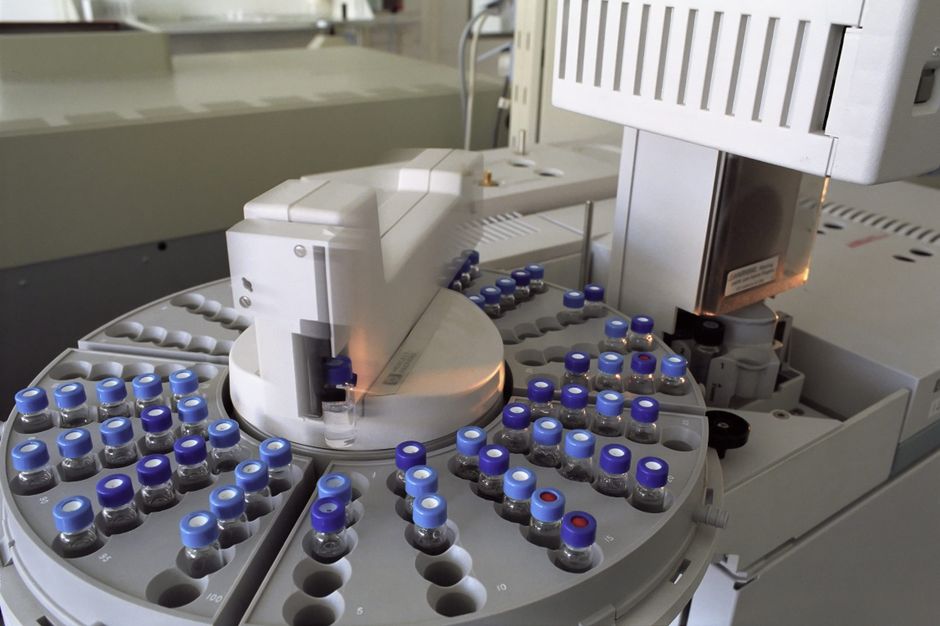
The scientific method provides a systematic framework for investigating claims about the natural world, including those that fall outside the mainstream. For skeptics, applying this method to paranormal phenomena—such as hauntings or telepathy—offers a way to test hypotheses with rigor and transparency. Rather than dismissing such claims outright, a methodological approach seeks to understand the conditions under which they might occur and whether they hold up to scrutiny.
This article outlines key components of the scientific method as they apply to paranormal research: controlled experiments, statistical analysis, and peer review. It also examines case studies of haunted houses and telepathy to illustrate how these principles can be put into practice. The goal is not to debunk or endorse specific claims, but to demonstrate how to evaluate them using established scientific standards.
By focusing on process over outcome, skeptics can engage with paranormal claims in a constructive manner. This approach emphasizes transparency, replication, and openness to revising conclusions based on evidence. Whether the phenomenon under investigation is a ghostly apparition or a telepathic message, the same rules of evidence apply.
Controlled Experiments in Paranormal Research
Controlled experiments are the cornerstone of scientific inquiry. In paranormal research, designing such experiments presents unique challenges because the phenomena are often reported to be spontaneous and unpredictable. A controlled experiment requires isolating variables, establishing a baseline, and ensuring that the effect—if any—can be attributed to the phenomenon rather than to chance or mundane factors.
For haunted houses, researchers might set up monitoring equipment to record environmental changes (temperature, electromagnetic fields, infrasound) and compare readings during reported activity with periods of inactivity. They also need to account for natural causes such as drafts, plumbing noises, or psychological suggestion. In telepathy experiments, participants are typically separated and asked to transmit or receive information without any known sensory channel. Randomization and blinding are critical to prevent subtle cues from influencing results.
One common pitfall is the lack of a control group. Without a comparison condition, it is impossible to determine whether the observed effect is specific to the paranormal claim or simply a result of normal cognitive biases. For example, in a haunted house investigation, a control location with similar physical characteristics but no reported activity can help rule out environmental factors. Similarly, in telepathy studies, a control condition where no sender is present can test whether receivers perform above chance.
- Define clear hypotheses and operational definitions of the phenomenon.
- Use random assignment and blinding where possible.
- Record all variables, including potential confounds.
- Pre-register the study design to reduce bias.
Even with careful design, paranormal experiments often face criticisms about replicability. If results cannot be consistently reproduced by independent researchers, the evidence remains weak. Therefore, controlled experiments should be reported in enough detail to allow others to attempt replication.
Statistical Analysis: Distinguishing Signal from Noise
Statistical analysis helps determine whether observed patterns are meaningful or simply due to chance. In paranormal research, this involves calculating the probability that results could have occurred randomly. For instance, in a telepathy experiment with hundreds of trials, the number of correct guesses can be compared to the expected chance rate using statistical tests such as chi-square or t-tests.
However, statistical significance alone does not prove a paranormal cause. It only indicates that the result is unlikely under the null hypothesis. Researchers must also consider effect size, confidence intervals, and the possibility of multiple comparisons inflating false positives. In haunted house studies, apparent correlations between electromagnetic field spikes and reported sensations might be statistically significant but could also be explained by other factors like suggestibility or environmental noise.
Bayesian methods offer an alternative framework by incorporating prior probabilities and updating beliefs based on new data. This approach can be particularly useful in paranormal research, where prior skepticism is high. By explicitly stating assumptions and updating them, researchers can avoid overinterpreting weak evidence.
“The first principle is that you must not fool yourself—and you are the easiest person to fool.” — Richard Feynman
To ensure robust analysis, data should be made available for reanalysis, and researchers should report all outcomes, not just significant ones. This practice reduces publication bias and allows the scientific community to assess the strength of the evidence collectively.
Peer Review and Replication in Anomalistic Research
Peer review is a quality-control mechanism where independent experts evaluate a study’s methodology, analysis, and conclusions before publication. In paranormal research, peer review helps filter out studies with flawed designs or exaggerated claims. However, it is not foolproof; reviewers may have their own biases, and controversial topics can sometimes be evaluated less rigorously.
Replication is the ultimate test of reliability. A single study, no matter how intriguing, is rarely sufficient to establish a paranormal phenomenon. Independent replication by different researchers using different equipment and participants strengthens confidence in the findings. In anomalistic research, replication attempts have yielded mixed results, with some studies reporting effects that later failed to replicate.
Journals specializing in parapsychology, such as the Journal of Parapsychology or the Journal of the Society for Psychical Research, have their own peer review processes. Skeptics can engage with this literature by examining the methods and looking for independent replications. Organizations like Anomaly Files often emphasize the importance of transparency and open data in such investigations.
- Check whether the study was pre-registered.
- Look for independent replications.
- Assess whether the analysis was pre-specified or exploratory.
- Consider the journal’s reputation and review standards.
Even with peer review and replication, conclusions should remain provisional. Science is a cumulative process, and paranormal claims require extraordinary evidence that withstands repeated testing.
Case Study: Haunted Houses
Haunted houses are a classic subject of paranormal investigation. Reports often include unexplained noises, temperature changes, and feelings of presence. From a scientific perspective, these experiences can be studied by examining environmental variables and psychological factors. Researchers might use equipment to measure infrasound, electromagnetic fields, and air currents, while also documenting the subjective experiences of visitors.
One well-known case is the “Haunted Gallery” at Hampton Court Palace, where visitors reported feelings of unease. Controlled experiments found that infrasound, possibly from a ventilation system, correlated with these sensations. This does not mean the ghost was debunked, but it suggests a natural explanation that can be tested further. Another example is the “Amityville Horror” house, where investigations revealed inconsistencies and potential hoaxes, highlighting the need for careful documentation.
In such studies, it is essential to differentiate between anecdotal reports and systematic data. Anecdotes can inspire hypotheses, but they cannot confirm them. Researchers should also consider the role of expectation and suggestion, which can lead to false positives. By combining environmental monitoring with psychological assessments, a more complete picture can emerge.
For skeptics, haunted house investigations offer a practical way to apply the scientific method. The phenomena are often localized and can be studied with portable equipment. Even if no paranormal cause is found, the process can yield insights into how environmental factors influence perception.
Case Study: Telepathy Experiments
Telepathy, the purported ability to transmit thoughts directly from one mind to another, has been tested in controlled laboratory settings for decades. Classic experiments involve a “sender” who views a randomly selected image and a “receiver” in a separate room who attempts to identify it. The receiver’s responses are compared to chance expectation.
Early experiments by J.B. Rhine at Duke University in the 1930s reported above-chance results, but these were criticized for methodological flaws such as inadequate randomization and sensory leakage. More recent studies, like the ganzfeld experiments, have attempted to address these issues by using sensory deprivation and automated randomization. While some meta-analyses have reported small but statistically significant effects, these findings remain controversial due to concerns about replication and potential biases.
A key challenge in telepathy research is ruling out conventional explanations. Participants might unconsciously pick up on cues, or the analysis might involve multiple comparisons. To mitigate these risks, researchers use double-blind procedures, pre-registered protocols, and independent replication. Even then, the effect sizes are typically small and not consistently replicated across laboratories.
For skeptics, telepathy experiments demonstrate the importance of rigorous controls. They also show that even well-designed studies can produce ambiguous results. The scientific method does not provide definitive answers overnight; it is a gradual process of eliminating alternative explanations and building a body of evidence.
Conclusion: A Skeptical Approach to the Paranormal
Applying the scientific method to paranormal phenomena is a challenging but worthwhile endeavor. It requires careful experimental design, appropriate statistical analysis, and a commitment to peer review and replication. Case studies of haunted houses and telepathy illustrate both the difficulties and the potential insights that can arise from such investigations.
For skeptics, the goal is not to dismiss all paranormal claims but to evaluate them using the same standards applied to any other scientific question. This means being open to the possibility of anomalous phenomena while demanding robust evidence. By focusing on methodology and transparency, researchers can contribute to a more informed debate.
Ultimately, the scientific method is a tool for reducing uncertainty. Whether the subject is ghosts or telepathy, the process of testing hypotheses, analyzing data, and subjecting findings to scrutiny helps separate reliable knowledge from speculation. As Carl Sagan famously said, “Extraordinary claims require extraordinary evidence.” This principle remains a guiding light for skeptics and believers alike.